Home Roof Repair Help for Homeowners
Request an estimate from local providers
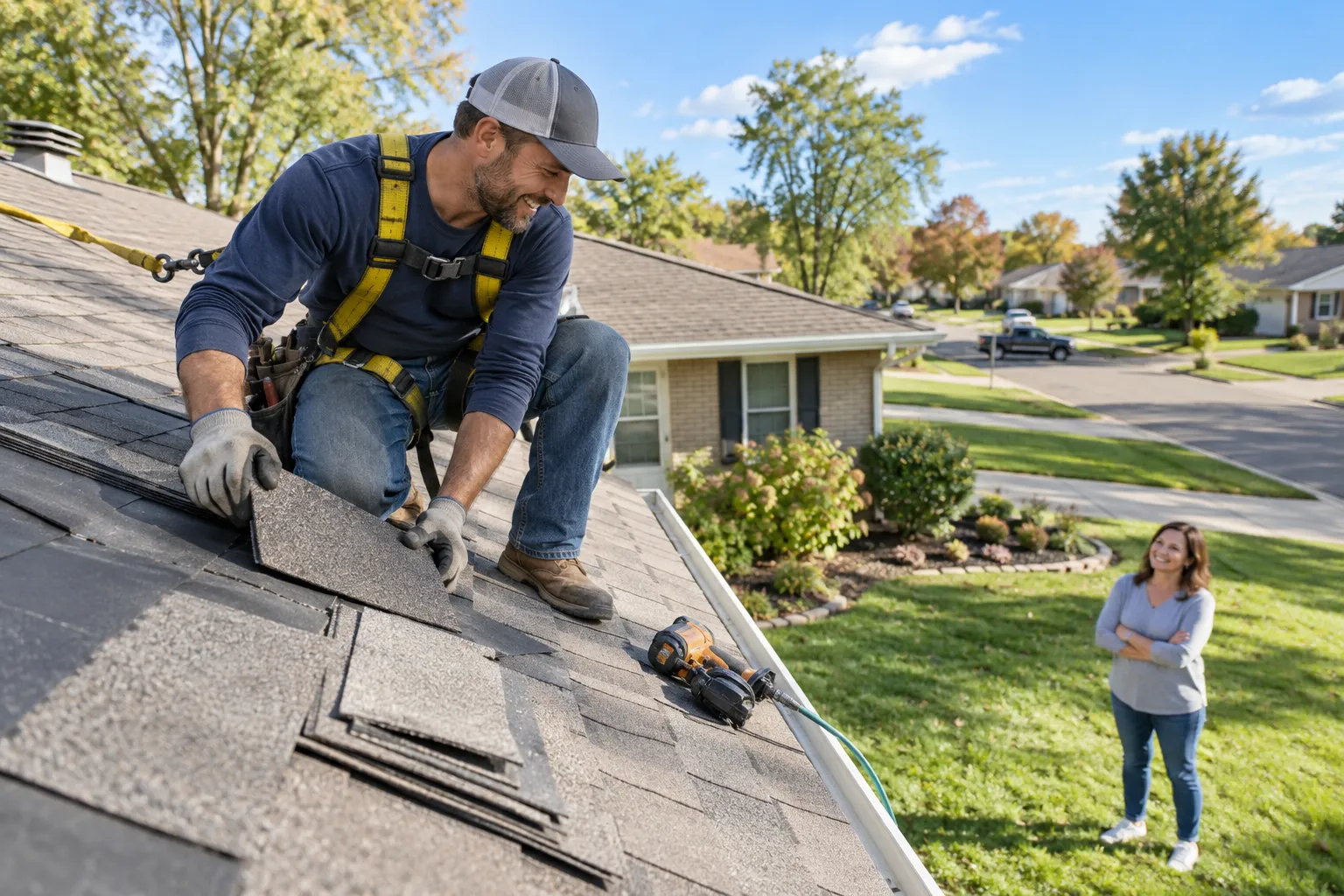
A roof repair is often the smallest bill you will see in the life of your house. It stays small only if the problem is found early. A loose shingle or a cracked seal can let water in for weeks before you notice a stain.
Directorsenormous Roofing is a referral service. We do not do the work. We connect homeowners across the St. Michael area with independent local providers who inspect the roof, explain the options and put the price in writing. You can compare quotes, ask questions and decide at your own pace. This page covers what to do first, what drives the cost, when a repair stops making sense, and how to keep the fixed spot from failing again.
Roof Leak? Start Here
If water is coming in, limit the damage first. Move items out of the way and set out a bucket. Take photos of the stain, the ceiling and any wet spots. Stay out of the attic if the floor looks soft or the wiring is wet.
If the leak is active, ask providers about emergency roof repair. Request a callback to check provider availability in your area. Availability varies, so ask each provider what they can offer for your situation.
Why Small Roof Leaks Grow Fast
Timing changes the price. A small leak follows a path, and each rain makes the path wider.
The first day
Water soaks insulation and may drip onto the ceiling. This is the easiest stage to fix. A provider may only need to reseal one spot.
The first week
Wet wood stays damp in humid summers. Stains spread and paint may bubble. Mold can start where air does not move.
The first season
In cold winters, trapped water freezes and expands. That can lift shingles and crack seals. A small repair can become a decking repair, which costs more.
Common Roof Repairs
Most home roof repairs fall into a few groups:
- Replacing cracked, curled or missing shingles
- Resealing or replacing flashing around chimneys and walls
- Fixing worn rubber seals around plumbing vents
- Clearing and repairing valleys where water collects
- Replacing soft or rotted decking boards
Flashing and vent seals cause many leaks. They are small parts, so the repair is usually modest.
How a Roofer Finds the Leak
The stain on your ceiling is rarely right under the hole. Water travels along rafters before it drips. A good provider checks the attic first, looking for dark wood, damp insulation and daylight.
Then they walk the roof, or use a ladder or a drone view where it is safe. They look at flashing, vents, valleys and nailed areas. Some use a hose test. Ask what they found and request photos.
Repair or Replace?
This is the budget question. Repair usually makes sense when the damage is in one area and the rest of the roof is sound. Replacement may be wiser when the roof is old, has many patches, or shows curling and bare granules across large areas.
Ask providers to price both. A repair that costs a large share of a replacement may not be a good trade. Spending twice on patches can cost more than one planned job.
Temporary Fixes
A tarp or sealed patch can hold until a proper repair. Providers can often place these when weather allows. Do not climb a wet or icy roof yourself.
Temporary fixes are not permanent. Wind can lift a tarp, and sealant can fail in heat. Treat them as a short bridge, and keep your photos and receipts. Providers can often help document damage for a claim. Some policies may cover sudden damage, so check your policy.
Repairs on Different Roof Types
Material changes the method and the price.
- Asphalt shingles: Easy to patch, though older shingles can be brittle and hard to match.
- Metal: Often needs sealant, fastener or panel work.
- Flat or low-slope roofs: Ponding water and seams are the usual trouble spots.
- Tile or slate: Pieces can be replaced, but walking on them can cause more breaks.
Older frame houses, bungalows and ranch homes often have more than one roof layer or older decking. Tell providers the age of the home.
Protect the New Repair
A fix lasts longer when the roof is cared for afterward. Clean gutters in spring and fall. Trim branches that rub the shingles. Look at the roof from the ground after each severe storm.
Check the attic each season for damp spots or frost on nails. Good ventilation helps the deck dry out. Ask the provider to note any weak areas so you can plan the next budget item.
Choosing a Roofing Contractor
Local roofing contractors differ in price, schedule and method. Ask each provider about:
- Proof of license and insurance where your area requires it
- A written scope of work and material list
- Who handles cleanup and debris
- A written warranty on the repair work
Be careful with anyone who asks for full payment up front or avoids putting things in writing.
Compare Written Quotes
Get at least two or three quotes for the same scope. Check that each lists materials, labor and what happens if hidden damage is found. A much lower price may leave something out. A much higher one is worth a question.
The smallest number on paper is not always the fairest. Look at the whole plan. Go back to a provider with questions before you decide.
Plan the Next Few Years
Every repair tells you something about the roof. Keep the report, photos and invoices in one folder. If the provider sees age-related wear, start a savings plan for replacement. That keeps a future job from becoming an emergency.
What's Included
Roof inspection and diagnosis
A local provider checks the attic and roof surface to find where water gets in.
Leak repair
Providers can reseal flashing, vents and joints that let rain slip through.
Shingle and decking fixes
Damaged shingles and soft boards can be replaced so the repaired area stays solid.
Written estimate
Each provider lists the scope, materials and price in writing, so you can compare options and decide with no obligation.
What Roof Repairs Typically Cost
Prices vary by roof size, pitch, material and how much hidden damage is found. These are typical U.S. ranges only. Ask each provider for a written quote that lists materials and labor.
| Repair item | Typical range | Notes |
|---|---|---|
| Replace a few shingles | $150 – $500 | Depends on roof age and matching |
| Vent boot or pipe seal | $150 – $450 | Common source of small leaks |
| Flashing repair | $200 – $800 | Chimneys and walls cost more |
| Valley repair | $300 – $1,000 | Water flow makes it a priority |
| Decking section replacement | $500 – $2,000 | Rises if rot has spread |
| Temporary tarp or patch | $300 – $1,000 | A short-term cover only |
How It Works
Describe the problem
Tell us what you see, such as stains, drips or missing shingles, and when it started.
Get matched with providers
A local provider in our network contacts you to talk through the roof and next steps.
Compare written quotes
Review the scope, materials and price from each provider, and ask any questions.
Choose and protect
Pick a provider, then follow simple upkeep habits to protect the new repair.
Why Call Directorsenormous Roofing
Plan First
We help you think through repair versus replacement before you spend, so the choice fits your budget.
Local Providers
You are matched with independent providers who work in your area.
Written Quotes
We encourage comparing written quotes so you can see what drives each price.
No Pressure
There is no obligation, and you decide when and whether to hire.
Other Services
Need home roof repair in St. Michael?
Tell us about your roof and we will pass your request to an independent provider in our network. Compare written quotes with no obligation.
Home Roof Repair FAQ
How much does it cost to repair a leaking roof?
Small fixes like a vent seal or a few shingles often run a few hundred dollars. Larger jobs with rotted decking can reach into the thousands. Costs vary by roof and region, so get a written quote from each provider before you decide.
Should I repair my roof or replace it?
If the damage is limited and the rest of the roof is sound, repair often makes sense. If the roof is old or has many problem areas, ask providers to price both. Compare the written numbers.
Will my insurance pay for a roof repair?
Some policies may cover sudden damage, such as from a storm, but not wear and tear. Check your policy. Providers can often help document damage for a claim.
Request a callback
Tell us about your roof and we will pass your request to an independent provider in our network. Compare written quotes with no obligation.
No obligation