Storm and Hail Damage Roof Repair
Request an estimate for your roof
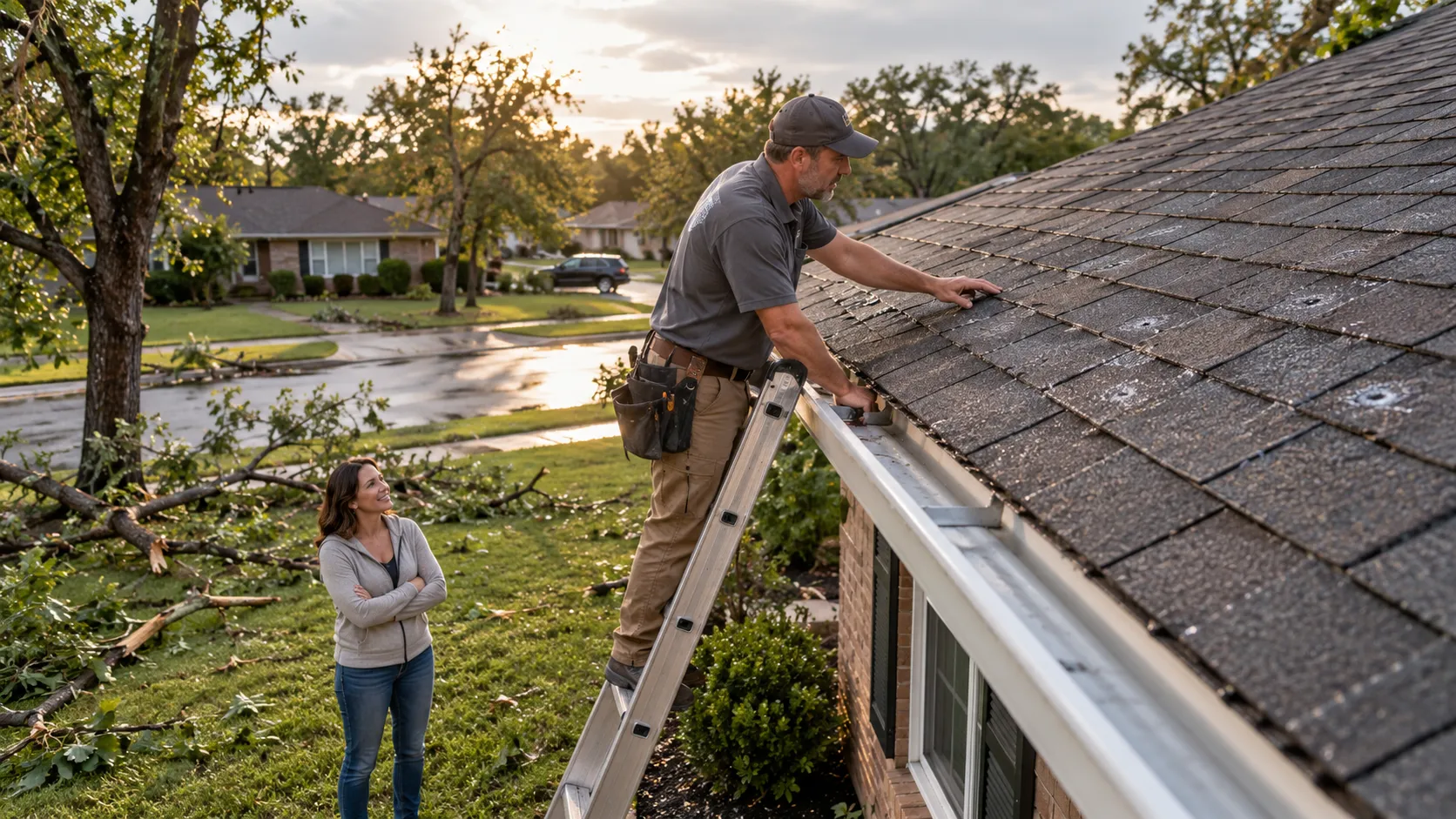
A hard storm can leave a roof looking fine from the street. Up close, there may be bruised shingles, lifted edges or small leaks that only show up weeks later. This page walks you through what to do first, what a provider checks, and how to plan the cost.
Directorsenormous Roofing is a referral service. We connect homeowners in the St. Michael area with independent local roofing providers who do the inspection and the work. We do not do the roof work ourselves. We suggest you compare written quotes, ask plain questions and think about upkeep after the job, so the new roof stays in good shape for years. You can also request an estimate from a provider in our network, with no obligation.
Storm just passed? Start with safety
Stay off the roof. Wet shingles, loose granules and ice are slick, and damaged decking can give way. Look from the ground instead.
Inside, check the attic and top-floor ceilings for drips, damp insulation or daylight. If a limb has come through, or a ceiling sags, keep people out of that room. That is an emergency roof repair situation.
Take photos from the ground. Pick up any shingle pieces in the yard and keep them. They help a provider see what happened.
The first day: stop more water getting in
The goal on day one is simple. Keep rain out until a proper plan is made. Move belongings away from wet spots and set out buckets. Many providers can respond quickly to place a temporary cover, though availability varies after a big storm.
Request a callback to check provider availability in your area.
Days two to seven: small leaks grow
Wet decking and insulation do not dry on their own, especially in a humid summer. Stains spread. Mold can start in a damp attic. In cold months, trapped water freezes, expands and widens every gap.
This is why timing changes the price. A small fix this week can turn into a larger job next month. Book an inspection while the damage is still easy to document.
Weeks later: the hidden damage shows up
Hail bruises may not leak at first. The mat under the granules is cracked, and the shingle wears out faster. Many owners only find out after a spring thaw or the next heavy storm.
If your area had hail, get the roof checked even if nothing drips yet.
Common types of storm damage
Hail impacts
Look for dark, round spots, missing granules in the gutters and dents in vents, flashing or the metal on the roof edge. Dented metal is a good clue that the shingles took hits too.
Wind damage
High winds lift, crease or tear off shingles. Edges and ridge lines go first. Once the seal strip is broken, the next gust finds it easier.
Falling limbs and debris
Branches can puncture the surface and crack the decking below. Even a small hole needs a proper patch or section replacement.
Water and ice stress
Severe thunderstorms, spring flooding runoff and deep winter frost all push water into weak spots. Check flashing, valleys and areas near the chimney.
What a storm damage inspection covers
A good provider looks at more than the shingles. Expect checks of the surface, flashing, vents, gutters, decking and the attic underside. They should show you photos and explain what they found in plain words.
Ask for a written report you can keep. It helps with quotes and with any claim.
Repair or replace after a storm?
Think of it as a budget trade-off. A few lifted shingles on a newer roof often suit a repair. Widespread hail bruising, brittle shingles on an older roof or damaged decking may point to a full replacement.
Repeated patches add up. If the roof is near the end of its life, a hail damage roof replacement can cost less over time than several repairs. Ask each provider to explain why they suggest one path over the other.
What drives the price
Size and pitch of the roof matter most. After that come the material, the number of layers to remove, the condition of the decking and how many vents or chimneys need flashing. Access and weather can also change the number.
Compare written quotes that list the same items. A low number that leaves out decking or cleanup is not really lower.
Working with your insurance
Some policies may cover sudden storm damage. Check your policy for the deductible and for any rules about wind or hail. Providers can often help document damage for a claim, with photos and a written scope of work.
Your insurer decides what is covered. Keep receipts for temporary repairs, since they may count.
Be careful with door-to-door offers
After a big storm, people may knock and say they spotted damage. Take your time. Do not sign on the spot or pay a large deposit upfront. Ask for a local address, proof of insurance and references you can check.
Use local roofing contractors you can reach later, in case something needs attention after the work.
Questions to ask the contractor
- Will you give me a written, itemized quote?
- Does the price include tear-off, decking repair and cleanup?
- What materials and warranty terms are in writing?
- Who handles permits and inspections?
- How do you protect landscaping and the home during work?
Protect the new roof after the work
Plan the roof as a long-term budget item. Once the job is done, walk the property after each major storm and look for loose pieces from the ground. Clear gutters each spring and fall so water does not back up.
Trim branches that hang over the roof. Keep the attic vented and dry. Book a short check once a year, and keep the final paperwork in one folder.
What's Included
Storm damage inspection
A provider checks shingles, flashing, vents and decking, then explains what they found in plain words.
Hail assessment
Bruising, granule loss and dented metal are checked and photographed for your records.
Temporary covers
Many providers can place a tarp or cover to limit leaks until the work starts.
Written repair plans
You get an itemized quote that shows repair or replacement options, so you can compare.
What storm roof work typically costs
These are typical U.S. ranges and they vary by roof size, pitch, materials and local rates. Use them to plan, then compare written quotes from more than one provider.
| Item | Typical range | Notes |
|---|---|---|
| Roof inspection | $150 – $500 | Often rolled into the job if you hire the provider |
| Temporary tarp or cover | $300 – $1,500 | Depends on roof size and access |
| Minor shingle repair | $300 – $1,200 | A few lifted or missing shingles |
| Decking section repair | $500 – $2,500 | Needed when water has soaked the boards |
| Flashing or vent repair | $250 – $1,000 | Common after wind or falling debris |
| Full roof replacement | $8,000 – $25,000 | Asphalt shingles are at the lower end |
How It Works
Stay safe, document
Stay on the ground, take photos of damage and keep any shingle pieces you find.
Limit further water entry
Move belongings, set out buckets and ask a provider about a temporary cover.
Compare written quotes
Request estimates from a few providers and check that each lists the same work.
Protect the new roof
After the job, clear gutters, trim branches and check the roof from the ground after storms.
Why Call Directorsenormous Roofing
Plan before you spend
Know the likely range and the trade-offs first, so a rushed decision does not set the budget.
Local providers
Independent providers in your area know the local weather, codes and the roofs common to older homes.
Written quotes
Itemized quotes let you compare the same scope side by side, not just one big number.
No obligation
Request an estimate, read it at your own pace and choose only if it fits.
Other Services
Need storm and hail damage roof repair in St. Michael?
Tell us about your roof and we will pass your request to an independent provider in our network. Compare written quotes with no obligation.
Storm and Hail Damage Roof Repair FAQ
How soon should I get my roof checked after a hailstorm?
As soon as it is safe. Hail bruising can hide for weeks and then show up as leaks. A prompt inspection makes damage easier to document and may keep a small problem from growing.
Does homeowners insurance pay for storm damage to a roof?
Some policies may cover sudden damage from wind or hail. Coverage depends on your policy and deductible, so check it. Providers can often help document damage for a claim.
Should I repair or replace a roof after hail damage?
It depends on how widespread the damage is and how old the roof is. A few damaged shingles may only need repair. Broad bruising or an aging roof can point to replacement. Compare written quotes.
Request a callback
Tell us about your roof and we will pass your request to an independent provider in our network. Compare written quotes with no obligation.
No obligation